Gorilla trekking in Bwindi Impenetrable National Park is one of the most extraordinary wildlife experiences on Earth. Uganda is home to roughly half of the world's remaining mountain gorillas, and Bwindi — a UNESCO World Heritage Site — shelters over 450 individuals across more than 20 habituated family groups. Encountering these gentle giants in their misty rainforest habitat is a profoundly moving, once-in-a-lifetime adventure.
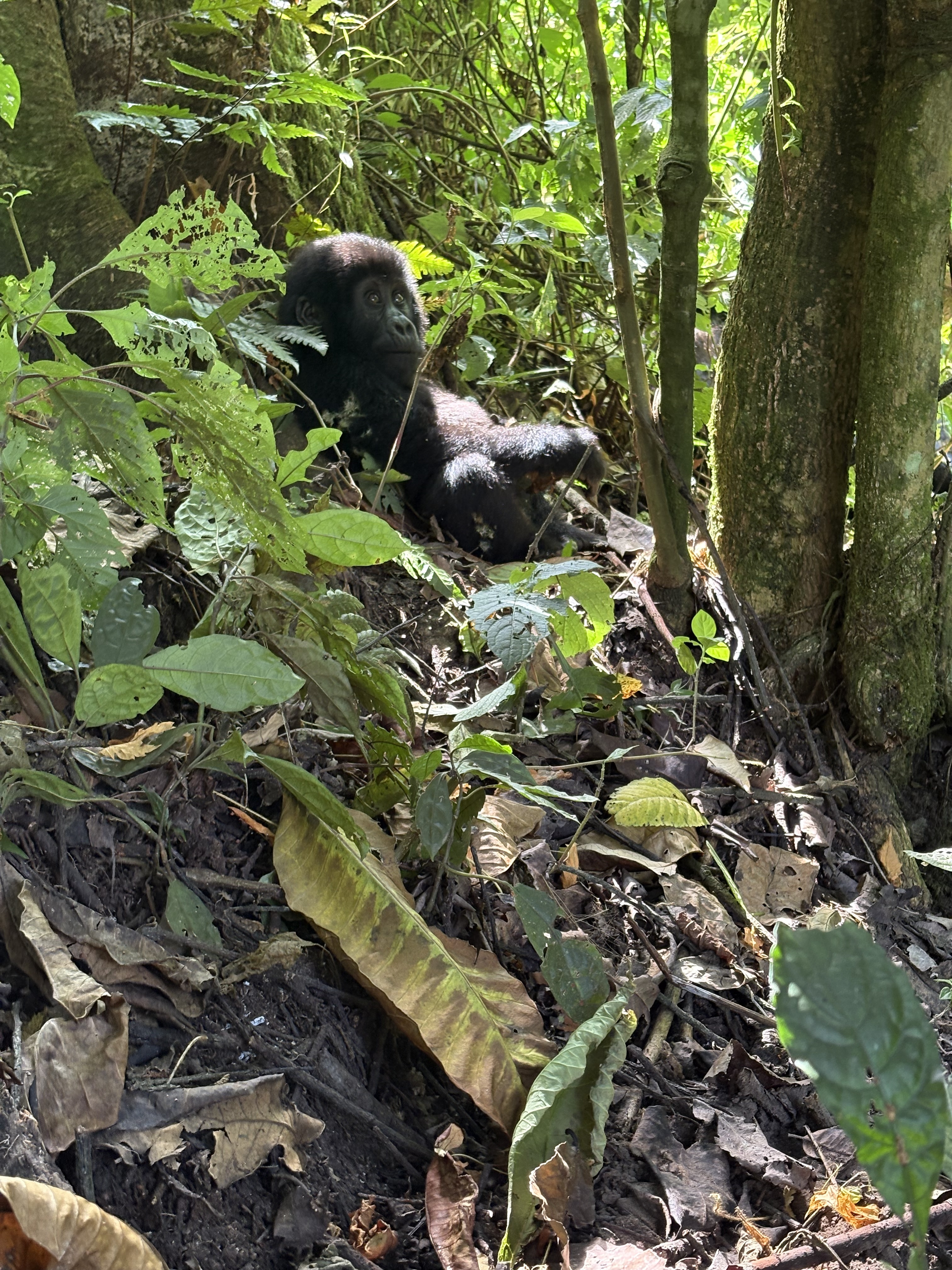
Mountain gorilla in Bwindi Impenetrable National Park, Uganda
What Is Gorilla Trekking?
Gorilla trekking is a guided hike through dense tropical rainforest to find a habituated gorilla family. “Habituated” means the gorillas have been gradually accustomed to human presence over a period of two to three years, allowing small groups of visitors to observe them at close range without causing distress. The trek is led by experienced Uganda Wildlife Authority (UWA) rangers and trackers who know the forest intimately.
Unlike a zoo visit, gorilla trekking places you in the gorillas' natural environment. You walk through tangled vines, bamboo thickets, and ancient trees at altitudes between 1,160 and 2,607 metres above sea level. Every trek is different — the gorillas move freely through the forest, so the route and duration change daily.
How Gorilla Trekking Works
The Morning Briefing
Your day begins early. Trekkers gather at one of four sector headquarters — Buhoma, Rushaga, Nkuringo, or Ruhija — at 7:30 a.m. for a briefing by UWA rangers. You will learn about the gorilla family you have been assigned, the trekking rules, and essential safety protocols. Groups are limited to eight visitors per gorilla family per day, ensuring a low-impact, intimate experience.
The Hike
After the briefing, your group sets off into the forest. Trackers who left at dawn radio the rangers with the gorillas' approximate location. Depending on where the gorillas slept the previous night and how far they have moved, the hike can take anywhere from 30 minutes to six or seven hours. The terrain is steep, muddy, and densely vegetated, but porters are available to carry your daypack and lend a hand on difficult sections.
One Hour with the Gorillas
When you reach the gorilla family, you are permitted exactly one hour in their presence. This rule protects the gorillas from prolonged human exposure and the risk of disease transmission. During that hour, you will watch silverbacks drumming their chests, juveniles wrestling playfully, mothers nursing infants, and the entire family going about their daily routine of feeding and grooming. The encounter takes place at a minimum distance of seven metres, though gorillas sometimes approach more closely of their own accord.
Key Facts: Gorilla Trekking
- Maximum 8 trekkers per gorilla family per day
- One hour with the gorillas
- Trek duration: 30 minutes to 7 hours
- Minimum age: 15 years
- Altitude: 1,160 – 2,607 m
- Available 365 days a year
- Permit cost: $800 (foreign non-resident)
- Over 20 habituated gorilla families
Gorilla Trekking Permit Costs and Booking
Every visitor needs a gorilla trekking permit issued by the Uganda Wildlife Authority. The current prices are $800 for foreign non-residents, $600 for foreign residents, and UGX 300,000 for East African citizens. Permits should be booked well in advance — ideally three to six months ahead for peak season (June to September and December to February). You can book directly through UWA or through a licensed tour operator. Read our dedicated gorilla permits guide for full details.
Physical Requirements and Fitness Level
Gorilla trekking is physically demanding but achievable for most people with a reasonable fitness level. The trails are uneven, steep, and often slippery. There are no marked paths once you leave the main trail — rangers cut through the undergrowth with machetes. Altitude ranges from around 1,160 metres in Buhoma to over 2,600 metres in Ruhija, so acclimatisation can be a factor.
If you have concerns about your fitness, let the UWA rangers know during the briefing. They can assign you to a gorilla family that is closer to the trailhead or on easier terrain. Porters cost around $15 and are highly recommended — they carry your bag, offer a steadying hand, and their fees support the local community directly.
What to Wear and Bring
Proper preparation makes a significant difference to your comfort and enjoyment. Here is a recommended packing list:
- Footwear: Waterproof hiking boots with ankle support and good grip. The trails are muddy year-round.
- Clothing: Long trousers (tucked into socks) and a long-sleeved shirt to protect against nettles, thorns, and insects. Neutral colours — greens, browns, khaki.
- Rain gear: A lightweight waterproof jacket. Bwindi receives rain throughout the year.
- Gloves: Gardening-style gloves for grabbing vegetation as you climb.
- Gaiters: Optional but useful for keeping mud and ants out of your boots.
- Daypack: Containing water (at least 2 litres), energy snacks, and a packed lunch.
- Camera: No flash photography. A camera with a good low-light capability is ideal for the dim forest interior.
- Sun protection: Hat, sunscreen, and sunglasses for open sections of the trail.
- Insect repellent: DEET-based repellent is recommended.
The Four Trekking Sectors of Bwindi
Bwindi Impenetrable National Park is divided into four trekking sectors, each offering a distinct experience:
Buhoma Sector
The original and most established sector, Buhoma is the most accessible from the northern entrance. It has excellent infrastructure and a range of accommodation options from luxury to budget. The terrain is generally less steep than other sectors, making it a good choice for less experienced hikers. Explore Buhoma sector lodges.
Rushaga Sector
Rushaga in the south has the highest number of habituated gorilla families, which means more permit availability. The terrain is moderately challenging with beautiful scenery. It is closer to Lake Bunyonyi, making it easy to combine gorilla trekking with a lake visit. See Rushaga sector lodges.
Nkuringo Sector
Nkuringo offers dramatic ridgetop views of the Virunga volcanoes and Albertine Rift Valley. The terrain is the most physically demanding, with steep ascents and descents. It rewards trekkers with spectacular scenery and a more rugged, adventurous experience. Browse Nkuringo sector lodges.
Ruhija Sector
Ruhija is the highest-altitude sector and the least visited, offering a quieter trekking experience. It is renowned for exceptional birding, including the rare African Green Broadbill. The cooler temperatures and misty atmosphere add to its mystique. View Ruhija sector lodges.
Tips for the Best Gorilla Trekking Experience
- Book permits early. Peak-season permits sell out months in advance. Plan at least six months ahead for the best availability.
- Hire a porter. For $15, a porter carries your bag and helps you on steep sections. The money goes directly to the local community.
- Stay close to the trailhead. Choose a lodge near your assigned trekking sector to minimise early-morning travel. Browse our guide to the best lodges in Bwindi.
- Train beforehand. Spend a few weeks walking hills, climbing stairs, or doing light cardio to prepare your legs and lungs.
- Follow the rules. Maintain a seven-metre distance, do not use flash, and do not eat or drink near the gorillas. If you feel unwell on the day, inform the rangers — you may be asked to stay back to protect the gorillas from illness.
- Be patient. The trek can be long and tiring, but the moment you sit with a gorilla family in their forest home, every step is worth it.
Frequently Asked Questions
How long does gorilla trekking in Bwindi take?
Gorilla trekking typically takes between 2 and 8 hours depending on the location of the gorilla family that day. The actual time spent with the gorillas is strictly limited to one hour. Treks from Buhoma tend to be shorter on average, while Nkuringo and Ruhija treks can be longer and more strenuous.
How much does a gorilla trekking permit cost in Uganda?
A gorilla trekking permit costs $800 for foreign non-residents, $600 for foreign residents, and UGX 300,000 for East African citizens. Permits are issued by the Uganda Wildlife Authority and can be booked directly or through a licensed tour operator.
What is the minimum age for gorilla trekking?
The minimum age for gorilla trekking in Bwindi Impenetrable National Park is 15 years old. There is no maximum age limit, but all participants should be in reasonable physical health. Families with younger children can explore alternative activities such as nature walks and community visits.
What should I wear for gorilla trekking in Bwindi?
Wear long trousers tucked into socks, a long-sleeved shirt, waterproof hiking boots with ankle support, gardening gloves, a waterproof jacket, and optionally gaiters. Stick to neutral colours — greens, browns, or khaki. Avoid bright colours and strong perfumes.
Can I trek gorillas year-round in Bwindi?
Yes, gorilla trekking in Bwindi is available every day of the year. The dry seasons (June to September and December to February) offer easier trail conditions, but the wet season can mean fewer crowds and lush, vibrant scenery. Read our best time to visit guide for seasonal details.